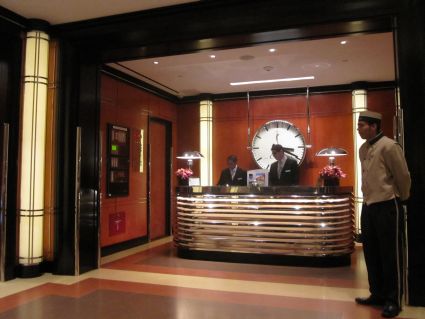
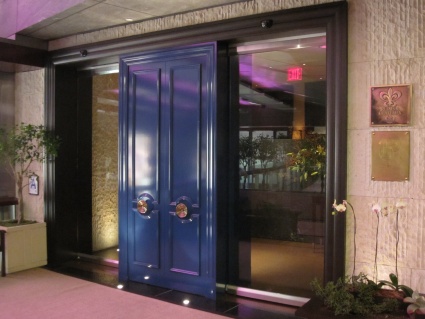
Precisely 134 steps from the consumer carnage of New York’s Times Square is the first of two discreet entrances on West 44th Street. Cloaked in black awnings and manned by immaculately dressed doormen, they lead without fanfare to one of the city’s most elegant five-star hotels.
The Chatwal Hotel has no grand driveways, no gold-trimmed lobbies and no convertible Bentleys parked outside. Instead, it aspires to re-create the refined glamour and elegance of its heritage: the art deco heyday of 1930s New York.
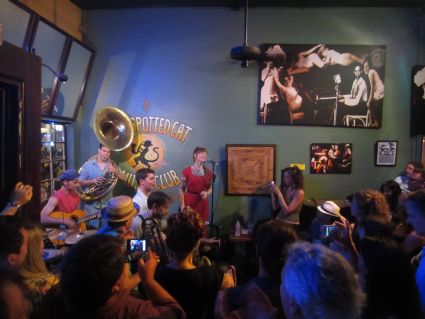
It’s a typical Tuesday night on Bourbon Street. Young people clutching dangerously strong daiquiris roam the narrow, neon-lit strip, past a gaudy parade of bars, strip clubs and tattoo parlours.
Competing spruikers try to lure people inside with the promise of cheap drinks, while up on a balcony a group of guys is yelling at girls to lift up their tops. Two men stand morosely outside an empty bar wearing sandwich boards that read: “Huge Ass Beers”.
This is my first time in the French Quarter and I’m struggling to reconcile the scenes with the romanticised vision in my head. New Orleans is, after all, the birthplace of jazz. I want to wander through the Quarter’s historic streets to a soundtrack of soft clarinet melodies wafting from behind wrought-iron balconies. Instead, this feels like Sydney’s Kings Cross on a Saturday night.
“I dunno,” says the guy standing next to me as we gaze over the valley. “The colours just ain’t poppin’ this year.”
I look at him in disbelief. In front of us is a sweeping vista of tree-blanketed hills in a riot of autumnal shades. There are lipstick reds and buttercup yellows, deep mauves and vibrant oranges. The colours shine with such intensity it looks as if each leaf has been painted by a Disney animator. If this ain’t poppin’, I don’t know what is.
Canada is a bit of a show-off when it comes to national parks.
Not only does it have more of them than anywhere else in the world, but its most famous Banff National Park is just a two-hour drive from Calgary and home to the bustling town of Banff and the stunning Lake Louise.
Visit in winter and you have access to a wide range of world-class ski resorts; visit in summer and you’re surrounded by a majestic landscape of mountains, lakes and forests just begging to be explored.
Here are two signature walks one easily accessible from Banff, the other from Lake Louise that showcase the area’s enviable natural beauty.
This doesn’t look good. We’re heading towards a towering wall of water that has capsize written all over it.
We paddle hard, digging deep into the swirling river, hoping to power through. We hit the wave square on and the raft is flung skyward.
Suddenly, I’m paddling through thin air. And I’m no longer in the raft. Everyone else has managed to grab the safety rope but I’ve been catapulted into the middle of Terminator 2, a Class 5 rapid.
I surface, wide-eyed with fear, and look for help. Seconds later a support kayak appears and tows me through the churning waters back to the boat.
Tembo, our guide, hauls me in and hands me my paddle. “Next time,” he says, smiling, “grab the rope.”
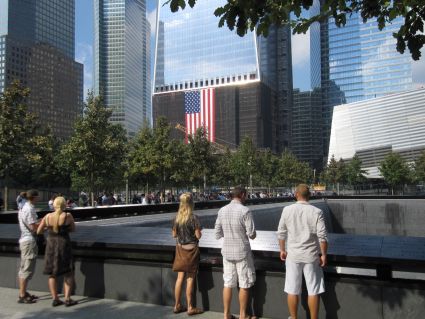
Back in 1961, The New York Times described the atmosphere around Wall Street thus: “A deathlike stillness that settles on the district after 5:30 and all day Saturday and Sunday.” It’s true that ever since the area became a financial hub in the mid-1800s, it’s been a predominantly commercial, rather than residential, neighbourhood. Thousands of people stream into the area’s gleaming array of skyscrapers each morning and then, just as quickly, file back into the subways to depart each night.
Twenty minutes after seeing two hippos mating – an enthusiastic spectacle accompanied by a fanfare of grunts and snorts – we stumble across a pair of elephants at it as well.
It’s hard to imagine two more cumbersome-looking creatures getting frisky but, rather than it being the awkward, gee that has to hurt, display I was expecting, it’s all rather graceful and discreet.
South Africa’s Northern Cape is a vast, sparsely populated region that rarely makes it on to travellers’ itineraries.
This is a pity as it’s home to numerous natural wonders including the stunning red sand Kalahari desert, one of Africa’s largest national parks, and the mighty Orange River.
Here are two examples of the adventures that can be had in this remote wilderness.
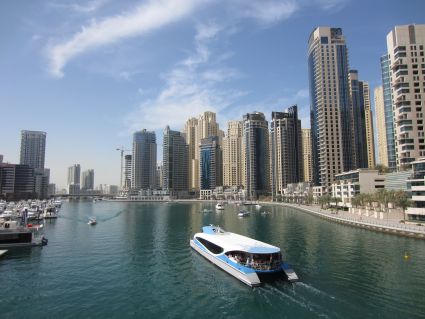
Call it the Dubai Dilemma. To stop over or not to stop over? So many travellers fly to Europe and Africa via this tiny Arab emirate that it’s become famous as somewhere to break up the journey, rather than a destination in its own right. I decide to put it to the test by spending 48 hours there – will Dubai have enough attractions and activities to keep me entertained?
View from Cape Grace Hotel in Cape Town – photo by Rob McFarland
GQ Magazine, Australia – June 2012
Few places can match Cape Town for natural wonders — a coastline fringed with white sand beaches, lush foothills peppered with world-class vineyards and the stunning Table Mountain as a backdrop. But what makes this city — and country — so compelling is the legacy of apartheid, abolished 22 years ago. People are still working out how to live with each other. Everyone from taxi drivers to tour guides has an opinion and you’ll hear a diverse set of predictions about the future.
Finalist, 2012 ASTW Best Australian Story under 1000 words
There’s a feeling you get when you say goodbye to family or friends after a long night of entertaining: a mixture of sadness because they’re going and relief because you can finally relax and put your feet up. That’s exactly how I feel now as I watch Fantasea Wonder retreat towards the horizon.
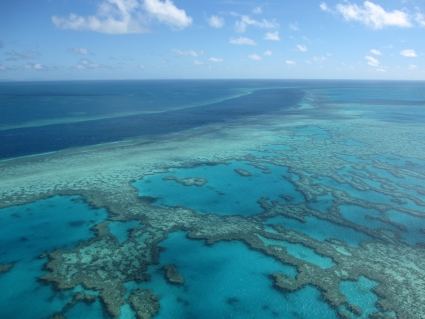
Six hours ago I was one of 120 passengers who boarded the high-speed catamaran at Hamilton Island and made the two-hour cruise to Reefworld – a floating pontoon permanently moored over the Great Barrier Reef. All day we’ve enjoyed snorkeling and diving, made use of the pontoon’s underwater viewing chamber and taken trips on its semi-submersible to gaze at the amazing variety of coral and fish.
There’s been the option to take a helicopter joy-flight over the reef and we’ve feasted on a barbecue lunch under the warm Queensland winter sun.
But while 120 people made the trip out, only 119 are going back. Sadly, someone’s been eaten. I’m kidding. I’ll be staying here overnight.
Close your eyes and imagine the world’s best cocktail bar. Perhaps it’s perched on the edge of a cliff on a Greek island. Or on the rooftop of a Bangkok skyscraper. Either way it’s probably filled with a social-pages crowd of white-suited George Clooney lookalikes and statuesque supermodels. It’s guest-list only, obviously, and a round of drinks will relieve you of a week’s rent.
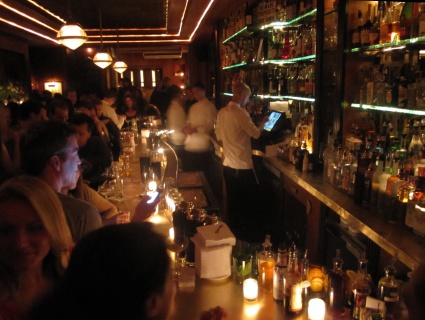
At least that’s what you might think. However, according to the judges of the Spirited Awards, a prestigious ceremony held as part of the annual Tales of the Cocktail bar-tending festival in New Orleans, you’d be wrong. Last July they declared a small, view-less bar in New York’s West Village, with no guest list and a frankly disappointing lack of statuesque supermodels, the best cocktail bar in the world.
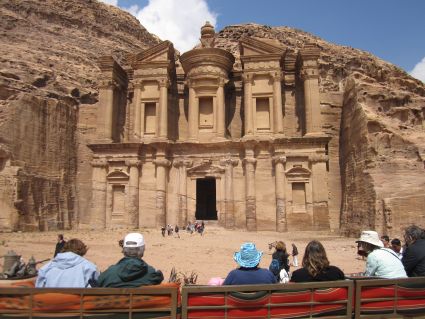
The Monastery inside Petra, Jordan – photo by Rob McFarland
Signature Magazine, Australia – March 2012
As we’re walking through the Siq, the meandering chasm of rock that leads to the ancient city of Petra, our entertaining guide beckons us over to the right-hand wall. Apparently we’re looking for an eagle’s nest lodged high in the cliff face. None of us can see it so he shuffles us over to the opposite wall and tells us to turn around.
Suddenly, it all becomes clear. Through a narrow gap in the rock we get our first glimpse of Petra’s infamous Treasury, a spell-binding, 43m high Hellenistic facade carved out of sheer rock in the first century AD.
In October The New York Times awarded Thomas Keller’s Per Se restaurant its highest accolade of four stars, saying, “no restaurant in New York City does a better job than Per Se of making personal and revelatory the process of spending hundreds and hundreds of dollars on food and drink”.
I’m here to tell you a secret. You don’t have to spend hundreds and hundreds of dollars to eat at Per Se. Or at many of New York’s other top restaurants for that matter.
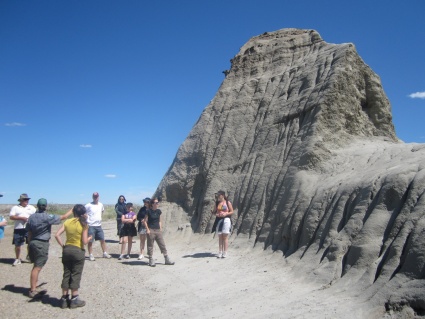
You’d expect the place where more fossils have been found than any other single location in the world to be hermetically sealed in a giant bubble and surrounded by armed guards and tripwires.
But here I am, roaming around a World Heritage site, idly poking things with a wet finger to see if I’ve found a fossil (fossils feel sticky, rocks don’t).
I’m supervised, of course, by our infectiously enthusiastic tour leader, Erika, but it’s amazing and pleasantly surprising that a tour such as this exists. This is what transports 75 million-year-old history out of stuffy museums and into the open air and makes it interesting and exciting.
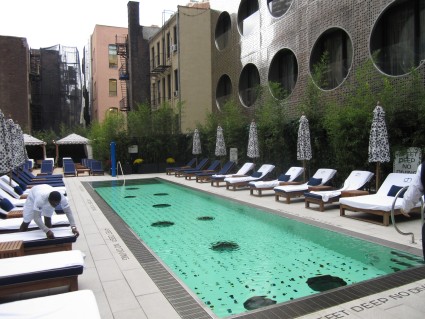
As I’m checking into Dream Downtown, a dozen beautiful, gazelle-like models sit clustered in the lobby, idly flicking through their portfolios. Sadly, despite sprinting to and from my room, I never see them again but it sets the tone for the sort of fashionable crowd you can expect to encounter in this stylish new hotel.
Finalist, 2012 National Travel Industry Awards Best Travel Writer
“Pay attention,” shouts Pedro from the back of the raft. Six panting heads snap around in unison. We’ve failed to make it to the exit on the left side of the rapid so after some furious back-paddling we’re now in an eddy on the more dangerous right side.
It’s time for Plan B. In front of us the river roars between two hulking granite boulders and there’s just enough space for our raft.
“Ready?” asks Pedro. We nod. Forward paddle. We launch back into the main flow and are catapulted towards the right boulder. Commands come in quick succession: Left back … right back … all forward and we dig our paddles into the bracing, teal-coloured water. The boulders whiz by in a blur of grey and we’re spat out into the calmer waters below.
Exhausted, I turn around to see Pedro grinning. “Good job,” he says, his deep, infectious laugh echoing off the sheer rock walls.
Today is Big Friday. In rafting terms, it’s the biggest day of whitewater in the world. Fifteen Class 4 and 5 rapids spread over 15km of the Futaleufu River in the depths of Chile’s Patagonia.
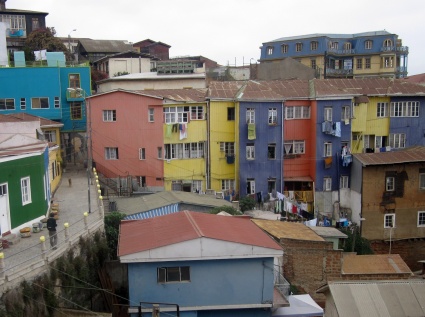
On paper, Valparaiso in Chile doesn’t sound all that appealing.
About 120km northwest of the capital, Santiago, it’s a busy commercial port with a handful of museums and monuments. Most mornings it’s enveloped in a thick, view-obscuring sea fog and getting to most of its hotels, bars and restaurants involves climbing one of 42 steep, stitch-inducing hills.
Despite all this, UNESCO declared the city a World Heritage site in 2003 and about 50 cruise ships call in every summer. Either Valparaiso has some very clever marketing people or there’s more to it than its resume suggests.
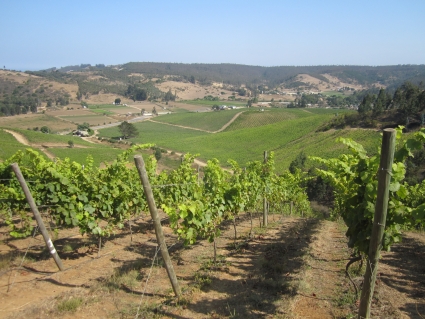
Everyone told Maria Luz she was mad to try growing grapes in Chile’s San Antonio Valley.
The valley is just 4km from the coast and every morning gets smothered in a cold sea fog. They said the grapes would never ripen. Or they’d be killed off by the frosts. And what about the humidity?
She ignored all the advice and planted her first grapes in 2000. They did ripen, eventually, taking two months longer than everywhere else, and they had to use heaters and fans to combat the frost and humidity.
But in 2003, Casa Marin winery had its first vintage and Luz became Chile’s first female vineyard owner and winemaker.
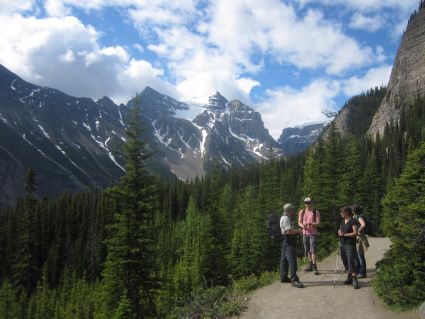
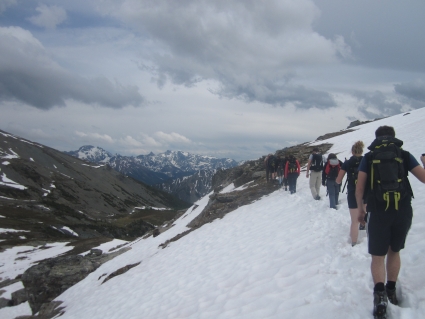
I’m huddled with a dozen others on an outcrop at 2500m in the Canadian mountains.
After a glorious morning of hiking along high ridges, meandering through an eerie burnt-out forest and zig-zagging down steep snow-covered slopes, the weather has turned.
The wind picks up, the temperature falls and fat raindrops are splashing insistently against our faces.
It’s not the ideal situation to be in when you’re a four-hour walk from your accommodation. But Dave, our guide, is unperturbed. A quick call on the radio and five minutes later we hear the welcome sound of our ride home. Chad deftly lands his Bell 212 helicopter 3m from where we crouch.