View from Cape Grace Hotel in Cape Town – photo by Rob McFarland
GQ Magazine, Australia – June 2012
Few places can match Cape Town for natural wonders — a coastline fringed with white sand beaches, lush foothills peppered with world-class vineyards and the stunning Table Mountain as a backdrop. But what makes this city — and country — so compelling is the legacy of apartheid, abolished 22 years ago. People are still working out how to live with each other. Everyone from taxi drivers to tour guides has an opinion and you’ll hear a diverse set of predictions about the future.
Finalist, 2012 ASTW Best Australian Story under 1000 words
There’s a feeling you get when you say goodbye to family or friends after a long night of entertaining: a mixture of sadness because they’re going and relief because you can finally relax and put your feet up. That’s exactly how I feel now as I watch Fantasea Wonder retreat towards the horizon.
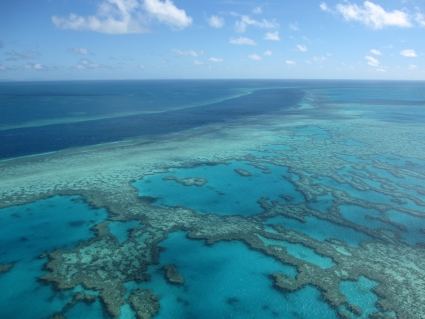
Six hours ago I was one of 120 passengers who boarded the high-speed catamaran at Hamilton Island and made the two-hour cruise to Reefworld – a floating pontoon permanently moored over the Great Barrier Reef. All day we’ve enjoyed snorkeling and diving, made use of the pontoon’s underwater viewing chamber and taken trips on its semi-submersible to gaze at the amazing variety of coral and fish.
There’s been the option to take a helicopter joy-flight over the reef and we’ve feasted on a barbecue lunch under the warm Queensland winter sun.
But while 120 people made the trip out, only 119 are going back. Sadly, someone’s been eaten. I’m kidding. I’ll be staying here overnight.
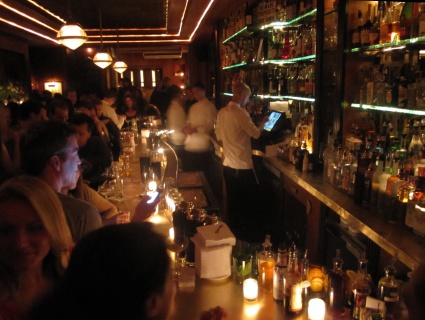
Close your eyes and imagine the world’s best cocktail bar. Perhaps it’s perched on the edge of a cliff on a Greek island. Or on the rooftop of a Bangkok skyscraper. Either way it’s probably filled with a social-pages crowd of white-suited George Clooney lookalikes and statuesque supermodels. It’s guest-list only, obviously, and a round of drinks will relieve you of a week’s rent.
At least that’s what you might think. However, according to the judges of the Spirited Awards, a prestigious ceremony held as part of the annual Tales of the Cocktail bar-tending festival in New Orleans, you’d be wrong. Last July they declared a small, view-less bar in New York’s West Village, with no guest list and a frankly disappointing lack of statuesque supermodels, the best cocktail bar in the world.
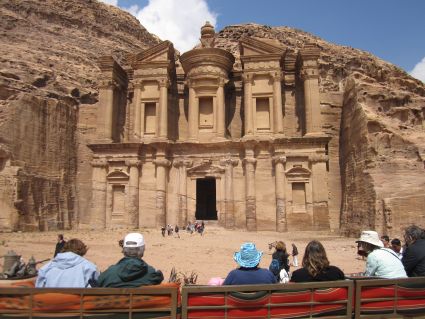
The Monastery inside Petra, Jordan – photo by Rob McFarland
Signature Magazine, Australia – March 2012
As we’re walking through the Siq, the meandering chasm of rock that leads to the ancient city of Petra, our entertaining guide beckons us over to the right-hand wall. Apparently we’re looking for an eagle’s nest lodged high in the cliff face. None of us can see it so he shuffles us over to the opposite wall and tells us to turn around.
Suddenly, it all becomes clear. Through a narrow gap in the rock we get our first glimpse of Petra’s infamous Treasury, a spell-binding, 43m high Hellenistic facade carved out of sheer rock in the first century AD.
In October The New York Times awarded Thomas Keller’s Per Se restaurant its highest accolade of four stars, saying, “no restaurant in New York City does a better job than Per Se of making personal and revelatory the process of spending hundreds and hundreds of dollars on food and drink”.
I’m here to tell you a secret. You don’t have to spend hundreds and hundreds of dollars to eat at Per Se. Or at many of New York’s other top restaurants for that matter.
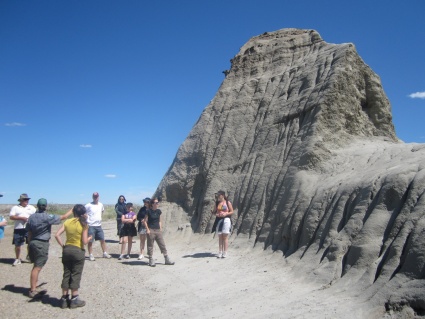
You’d expect the place where more fossils have been found than any other single location in the world to be hermetically sealed in a giant bubble and surrounded by armed guards and tripwires.
But here I am, roaming around a World Heritage site, idly poking things with a wet finger to see if I’ve found a fossil (fossils feel sticky, rocks don’t).
I’m supervised, of course, by our infectiously enthusiastic tour leader, Erika, but it’s amazing and pleasantly surprising that a tour such as this exists. This is what transports 75 million-year-old history out of stuffy museums and into the open air and makes it interesting and exciting.
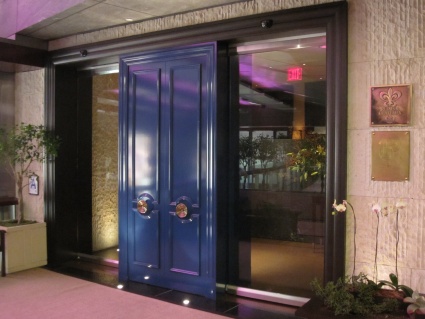
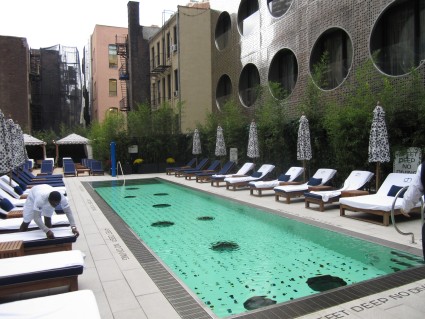
As I’m checking into Dream Downtown, a dozen beautiful, gazelle-like models sit clustered in the lobby, idly flicking through their portfolios. Sadly, despite sprinting to and from my room, I never see them again but it sets the tone for the sort of fashionable crowd you can expect to encounter in this stylish new hotel.
Finalist, 2012 National Travel Industry Awards Best Travel Writer
“Pay attention,” shouts Pedro from the back of the raft. Six panting heads snap around in unison. We’ve failed to make it to the exit on the left side of the rapid so after some furious back-paddling we’re now in an eddy on the more dangerous right side.
It’s time for Plan B. In front of us the river roars between two hulking granite boulders and there’s just enough space for our raft.
“Ready?” asks Pedro. We nod. Forward paddle. We launch back into the main flow and are catapulted towards the right boulder. Commands come in quick succession: Left back … right back … all forward and we dig our paddles into the bracing, teal-coloured water. The boulders whiz by in a blur of grey and we’re spat out into the calmer waters below.
Exhausted, I turn around to see Pedro grinning. “Good job,” he says, his deep, infectious laugh echoing off the sheer rock walls.
Today is Big Friday. In rafting terms, it’s the biggest day of whitewater in the world. Fifteen Class 4 and 5 rapids spread over 15km of the Futaleufu River in the depths of Chile’s Patagonia.
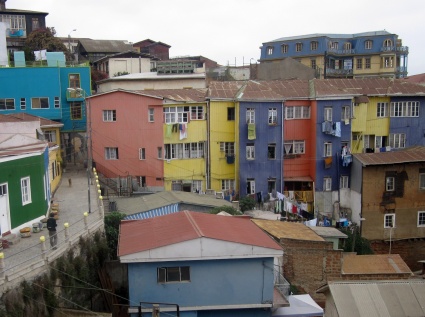
On paper, Valparaiso in Chile doesn’t sound all that appealing.
About 120km northwest of the capital, Santiago, it’s a busy commercial port with a handful of museums and monuments. Most mornings it’s enveloped in a thick, view-obscuring sea fog and getting to most of its hotels, bars and restaurants involves climbing one of 42 steep, stitch-inducing hills.
Despite all this, UNESCO declared the city a World Heritage site in 2003 and about 50 cruise ships call in every summer. Either Valparaiso has some very clever marketing people or there’s more to it than its resume suggests.
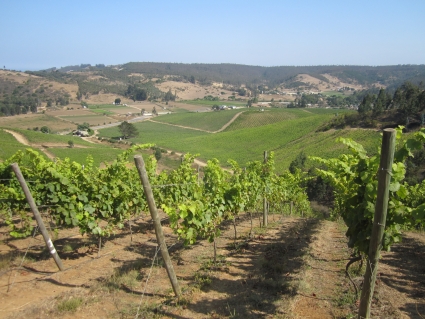
Everyone told Maria Luz she was mad to try growing grapes in Chile’s San Antonio Valley.
The valley is just 4km from the coast and every morning gets smothered in a cold sea fog. They said the grapes would never ripen. Or they’d be killed off by the frosts. And what about the humidity?
She ignored all the advice and planted her first grapes in 2000. They did ripen, eventually, taking two months longer than everywhere else, and they had to use heaters and fans to combat the frost and humidity.
But in 2003, Casa Marin winery had its first vintage and Luz became Chile’s first female vineyard owner and winemaker.
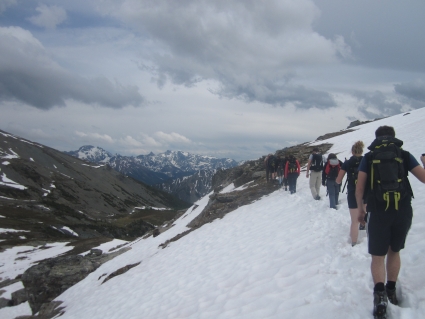
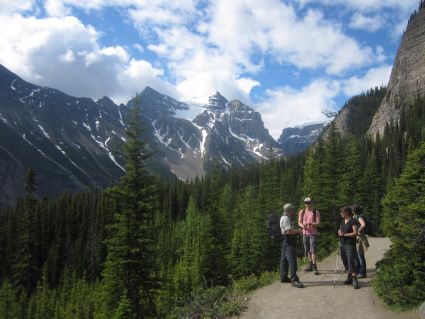
I’m huddled with a dozen others on an outcrop at 2500m in the Canadian mountains.
After a glorious morning of hiking along high ridges, meandering through an eerie burnt-out forest and zig-zagging down steep snow-covered slopes, the weather has turned.
The wind picks up, the temperature falls and fat raindrops are splashing insistently against our faces.
It’s not the ideal situation to be in when you’re a four-hour walk from your accommodation. But Dave, our guide, is unperturbed. A quick call on the radio and five minutes later we hear the welcome sound of our ride home. Chad deftly lands his Bell 212 helicopter 3m from where we crouch.
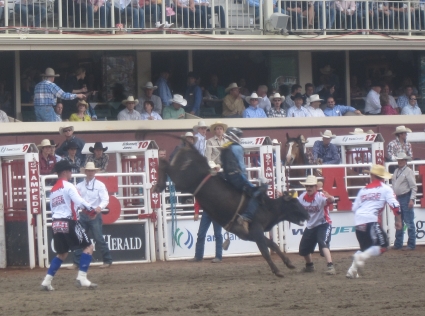
I’m 2m away from a man with one of the world’s most dangerous jobs. A day in the office for 24-year-old J.B. Mauney involves hopping on the back of one tonne of muscle, hoofs and horns and trying his hardest to stay there for eight seconds.
After which he has to get off without being trampled or gored to death.
To psyche himself up, he’s hitting himself, hard and repeatedly, in the arms, legs and head. It’s an unusual but effective technique. He’s won the event for the past two days running.
“GO, GO, GO!” screams the man sitting behind me in the jeep.
I look over my shoulder to see a three-tonne bull elephant approaching the back of our open-top jeep, trunk held up defiantly, ears flapping and head bobbing up and down.
I brace myself, expecting Philip, our guide, to floor the accelerator. Instead, he just tells the three of us in the jeep to keep perfectly still. “It’s OK, boy,” he calls out, his tone soothing but firm. “You’re all right. Just move along.”
The elephant continues to approach. To my horror, I find I’m completely frozen. I couldn’t get out and run even if I wanted to. Philip starts banging the side of the jeep with his hand. The elephant stops. There’s a stand-off. I hold my breath. Finally, it wheels around and in a cloud of dust disappears into the bush.
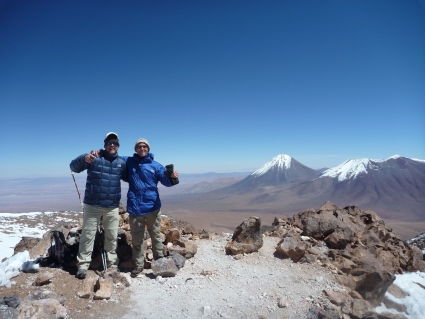
Top of Toco Volcano in Atacama desert - photo by Rob McFarland
Escape travel section, Australia – July 31, 2011
“Go up like an old man, come down like a teenager,” advises Pablo. I’ll second that. I’m 200 metres from the summit of 5600-metre-high Toco Volcano in the Chilean Andes and I feel 108.
At this altitude, every step is a breath-sapping test of physical and mental endurance. I’d never understood why climbers sometimes turn back within a few hundred metres of the top. Now I do.
Chile’s capital tends to get a bad rap when compared with other South American cities.
It might not have Rio’s party atmosphere or the style of Buenos Aires but it certainly has enough sights and attractions to justify hanging around for a few days.
It’s also the main gateway to the country, so if you’re coming to Chile, the chances are you’ll be passing through Santiago. So before you go dashing off south to trek in Patagonia or north to explore the Atacama Desert, take a few days to live life like a Santiaguino.
KiaOra (Air New Zealand’s inflight magazine), NZ – July 2011
Las Vegas offers much more than blackjack tables, roulette wheels and slot machines. Visitors can also enjoy wonderful restaurants, shopping and shows or even hiking and biking amid stunning desert scenery. If you’re planning a visit to the city that bills itself The Entertainment Capital of the World, here’s a rundown on the latest hotspots and happenings.
When you walk through the streets of Oman’s vibrant capital, Muscat, it’s hard to believe that the country’s Ministry of Tourism was only established in 2004.
Even more difficult to comprehend is that 34 years before that, the nation had only three schools, two hospitals and 10km of paved road.
Oman’s transformation from one of the poorest nations in the Middle East to one of the most accessible is nothing short of astounding. The man behind this impressive feat is ruler Sultan Qaboos and you’ll see his revered image in practically every shop and restaurant in the city.
Today, Muscat is a lively city with a wealth of cultural attractions including old forts, palaces and traditional souks alongside some stunning newer developments such as the Grand Mosque. English is spoken widely, you can get a decent meal for about $10 and a can of Coke for 50c.
For the next two hours I will be Colin Walker, an 18-year-old British art student visiting Turkey on holiday. My assignment is to meet another undercover agent in Ankara and exchange classified information.
Unfortunately, I’m rumbled at immigration. When the officer asks me where I was born, I panic and blurt out Blockley. I should have said Broseley.
Clearly, I’m not cut out to be a spy, but if you think you are then the new Spy Museum in Washington DC is a fascinating place to learn about this most secretive of professions. I have a low boredom threshold when it comes to museums but this is a textbook example of how they should all be: interactive, informative and entertaining.
There are two versions of how I strained my back in Aspen.
The one I told friends involved a pregnant mother in the path of a runaway snowmobile with me as the heroic saviour who selflessly dived to her rescue.
The other, more accurate, version was that I pulled it while lifting my suitcase on to the hotel bed.
Either way, on my first day in arguably the world’s greatest ski resort, I found myself in the frustrating position of not being able to ski.
So what else can you do in Aspen? Plenty, as it turns out.
Could I swing a cat? Probably not. Maybe a kitten. But I don’t care. I’m staying in a room that costs a fraction of what most New York hotels charge and I’ve got Manhattan on my doorstep.
The Pod Hotel is one of a growing number of New York properties that has tiny rooms at tiny rates. Offering “style on a shoestring”, it’s marketed as a hip and funky alternative to the big hotel chains. The rationale being, why pay a fortune to doss down in the city that never sleeps?