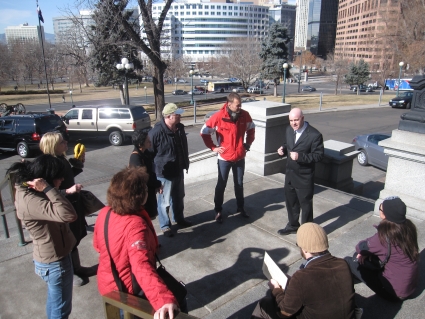
Getting clues from the ghost of Nicholas Trainor - photo by Rob McFarland
I’ve been recruited to help solve one of Denver’s most notorious crimes. On December 18, 1922, a Federal Reserve Bank delivery truck was being loaded with money outside the Denver Mint when three men pulled up in a black Buick and jumped out, firing sawn-off shotguns. Fifty guards returned fire but the robbers still managed to get away with $US200,000. One of them, Nicholas Trainor, was killed in the gunfight but the two others were never identified.
The case remained unsolved for 12 years until the Denver police suddenly announced they’d worked out who was responsible. Conveniently, all the gang members had either since been killed or were already in prison.
No one was ever charged in relation to the crime and the case was officially closed on December 1, 1934.
Today, we’ve been instructed to be at the entrance to platform two in Denver’s impressive Union Station at 10am. Just as the clock ticks over the hour, an agitated-looking woman comes clattering down the underpass wearing a 1920s-style blue sequin dress and carrying a battered brown suitcase.
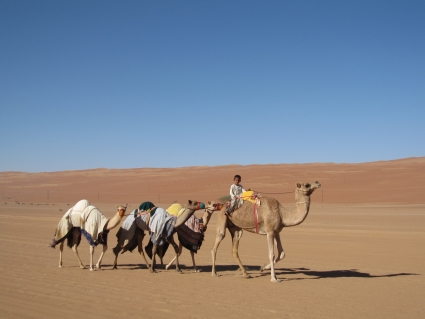
Camel train in Wahiba Sands, Oman - photo by Rob McFarland
It’s 6am and I’ve just dragged myself out of a warm, comfortable bed and up a near-vertical 100-metre wall of sand to watch the sunrise. You’ll rarely find me awake at 6am, let alone up, but this seems an appropriately intrepid way to start a day in which I’ll be following in the footsteps of one of the 20th century’s greatest explorers, Sir Wilfred Thesiger.
The Oxford-educated Thesiger eschewed life in suburban England, spending much of his life exploring Africa and the Middle East instead. He is famous for two crossings, in the 1940s, of a vast expanse of desert known as the Empty Quarter. Notable as the world’s largest uninterrupted body of sand, this inhospitable wilderness dominates much of the Arabian Peninsula, extending from Saudi Arabia into the United Arab Emirates, Yemen and Oman.
The journey I will undertake is not quite so ambitious. I will cross a much smaller desert in eastern Oman, called Wahiba Sands, which Thesiger visited in 1949. Despite the fact he did it by camel and I’ll be in an airconditioned four-wheel-drive, I can’t help but feel a certain comradeship with the explorer as I sit on the cool sand and watch the sunlight slowly flood the towering dunes. Thesiger endured unimaginable hardships on his travels and, as a tribute, I have decided to forgo my normal morning cup of tea.
With our belongings wrapped tightly in plastic bags and lashed to three body boards, the three of us tentatively wade into the creek. Soon the water is too deep to stand so we use the boards for buoyancy and kick for the other side. Ten minutes later, we’re standing on Whangapoua Beach, a long stretch of blindingly white sand backed by grass-covered dunes. Apart from a handful of birds, there’s not another soul here.
It’s hard to believe we’re on New Zealand’s fourth-largest island in the middle of the busiest holiday of the year. But that’s the appeal of Great Barrier Island – no one seems to know about it. The term “best-kept secret” is overused in travel articles but I honestly don’t understand why more people don’t come here. It’s only a four-hour ferry ride or 30-minute flight from Auckland and awaiting you is a ruggedly beautiful wilderness.
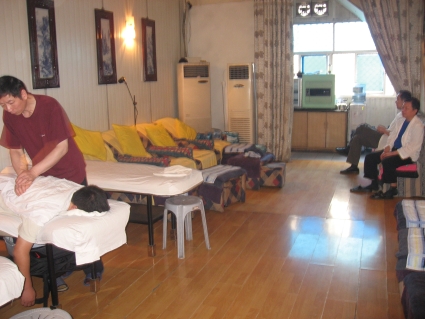
Lulu Massage Parlour in Shanghai - photo by Rob McFarland
It’s not a good start. After being shown to a treatment table by the receptionist at Lulu Massage, I instinctively start to strip off. I’m already down to my boxer shorts and am about to lie down when she comes running back out with a squeal and a flurry of hands. It would appear I’ve been a little overeager.
Apparently, the only items of clothing I need to remove are my shoes. I sheepishly put everything back on and quickly lie down to hide my glowing face.
During this kerfuffle my male masseur has been waiting patiently on the other side of the room. Why didn’t he say anything while I was stripping off? Because he’s blind. As are all the therapists employed at Lulu. It’s the parlour’s speciality and the reason I’m here.
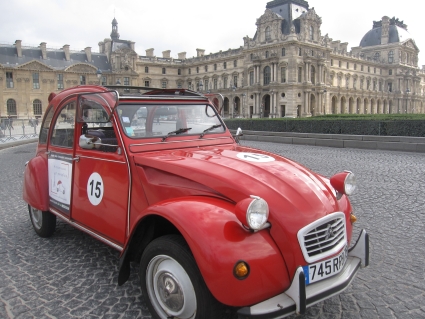
2CV in front of the Louvre - photo by Rob McFarland
“Would it be possible to stop for a photo?” I ask, as we approach the impressive gold-tipped Luxor Obelisk in the centre of the Place de la Concorde. “Of course,” replies Marie, and promptly brings us to a halt in the middle of the roundabout.
“Here?” I gasp, as cars, trucks and motorbikes weave around us on both sides.
“It iz OK,” Marie shrugs, and calmly continues explaining the history of the monument while I stick my head out of the sunroof like a meerkat and quickly take some shots.
Driving in central Paris is not for the faint-hearted. Not only is there the small matter of being on the other side of the road, navigating the city’s chaotic web of backstreets can be a nightmare and Parisians tend to have a driving style that is best described as assertive.
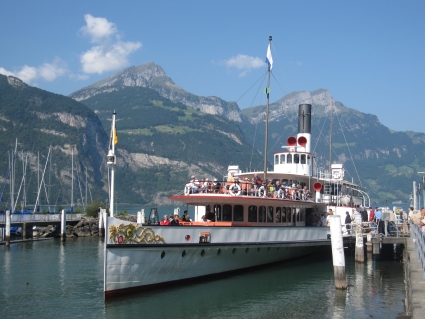
Paddle steamer moored at Fluelen - photo by Rob McFarland
Part of me wants us to be late. After all I’m in Switzerland, home to the most frighteningly efficient public transport system in the world; a country that measures just 350 kilometres by 220 kilometres but which has 5000 kilometres of railways and 13,000 kilometres of bus routes; a nation where timetables are so well co-ordinated you never have to wait more than 10 minutes for a connection; a seemingly mythical land where if a train is more than three minutes late, it’s announced as delayed.
But we’re not. At precisely 9.12am, the Schiller paddle-steamer glides away from her dock and sets off across the still waters of Lake Lucerne. And if that wasn’t disappointing enough, the sun is shining, the water is twinkling and I’m surrounded by some of Europe’s most stunning scenery. Damn Swiss show-offs.
It seems ironic to be looking around a museum devoted to an artist who believed people shouldn’t try to understand his work. As one of the founders of the surrealist movement, Rene Magritte famously said: “Insofar as my paintings are valid, they do not lend themselves to analysis.”
Not that this has dissuaded people from coming. Since opening in June last year, the Magritte Museum in Brussels has had more than 100,000 visitors and regularly sells out of its daily ticket allocation.
Before my visit I could have written what I knew about Magritte on the back of a stamp (and still had room for several other surrealist painters), so I was keen to learn more about such an influential figure.
Ipipiri cruising the Bay of Islands - photo by Rob McFarland
New Zealand is hardly short of picturesque holiday spots but the Bay of Islands, located three hours’ drive north of Auckland, is particularly idyllic. The natural bay provides a sheltered haven for boat lovers with dozens of islands to explore and plenty of coves and inlets in which to moor.
Looking at this tranquil picture today, it’s hard to believe it was once known as the “hell hole of the Pacific”. But if you’d visited the town of Russell in the early 1800s, you’d have found a lawless outpost famous for its drunkenness, gambling and prostitution. Sadly, I couldn’t find any evidence of this but I did stumble across a fascinating museum and several excellent cafes.
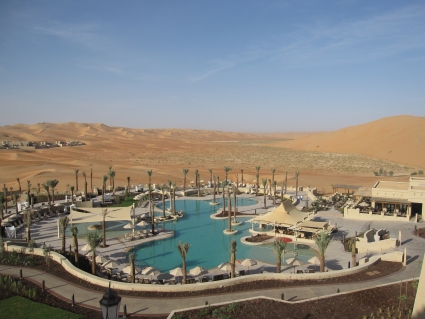
View of Liwa Desert from Qasr Al Sarab - photo by Rob McFarland
I’m starting to think this might be an elaborate joke. Allegedly, I’m on my way to one of the most impressive new resorts in the Middle East but I’m now more than 200 kilometres from Abu Dhabi and for the past hour have been surrounded by nothing but a vast expanse of featureless desert.
Suddenly, we turn off the main highway on to a small unmarked road that snakes among towering sand dunes. I give the driver a look that has “are you sure you know where you’re going?” written all over it but he continues regardless. All I keep thinking is why on earth would anyone build a hotel out here. It’d be too hard, too complicated, too expensive. No, someone is definitely having me on.
And then I see it. A riot of towers, turrets and serrated roofs in the sandy vastness. It is enormous. It’s not a resort, it’s a city. It’s the sort of vision that should be accompanied by a fanfare of trumpets.
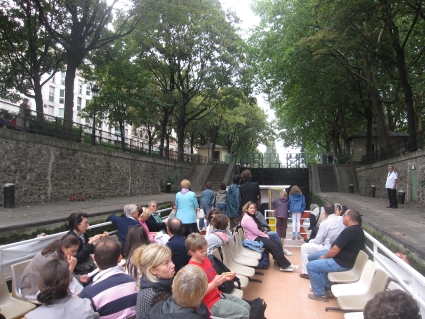
In a lock on Canal Saint-Martin - photo by Rob McFarland
The sun is shining, Edith Piaf is warbling softly in my ear and I’m watching an entertaining discussion between a group of beret-wearing men as to whom has the best boules. Could there be a more pleasant way to spend a Sunday afternoon in Paris?
A cruise on one of the city’s waterways is a great way to get your bearings and indulge in a spot of people watching. However, while the obvious choice is the River Seine, there is a lesser known but equally charming alternative.
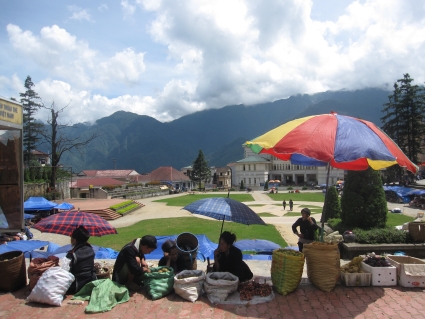
Teetering down steep stone stairs in inappropriate shoes and tight white designer jeans is a young, affluent Vietnamese woman. A multicoloured umbrella protects her from the sun and a private guide leads her carefully by the hand.
Coming up the other way is a young girl from the local Black Hmong hill tribe, dressed in an embroidered jacket and wearing the tribe’s trademark black hat. Her face is creased in effort as she struggles with a large basket of sticks strapped to her back. She stops to let the descending woman pass and they exchange a sideways glance that speaks volumes about the extremes of modern-day Vietnam.
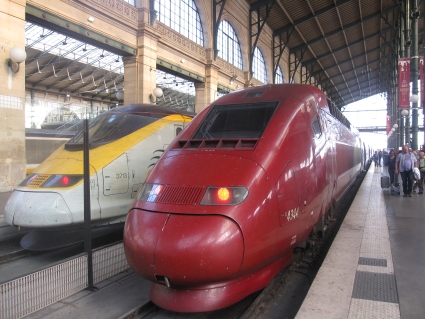
Thalys and Eurostar in Paris - photo by Rob McFarland
It sounds like a challenge from Mission: Impossible – travel more than 2500 kilometres, visiting nine cities in four countries in seven days. And all without setting foot on a plane.
In most continents such a feat would be impossible but Europe has a high-speed rail network that is the envy of the world. From Paris its tendrils reach up into Britain, Germany and the Netherlands and down into the south of Spain and Italy. Overnight trains mean you can leave London one afternoon and wake up the following morning in Venice. Or Madrid or Milan or Rome.
The advantages of rail over air travel are compelling. No more trekking to airports miles outside the city. No more liquid/gel/clear plastic bag shenanigans at customs. Trains depart from and arrive in city centres. They’re rarely late. They have comfortable seats, tables and dining cars. Some even have special family areas and Wi-Fi access. And, of course, you get to see some of the country you’re whizzing through at 300km/h.
On paper, there seems to be little contest. But what’s it really like? Is it really that easy? Do the trains run on time? Are they clean? And, most importantly of all, does it feel like a holiday? On a whistle-stop tour of Britain, Belgium, France and Switzerland, I found out.
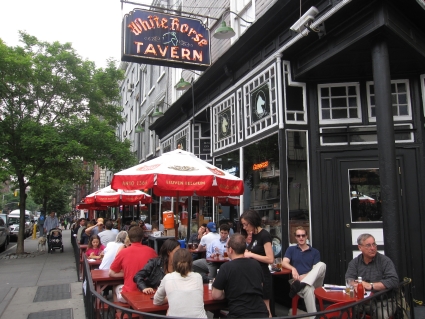
White Horse Tavern in New York's West Village - photo by Rob McFarland
Travelling on your own can be both the most liberating and soul-destroying of experiences. On the one hand you have the ultimate flexibility over your itinerary; on the other hand you have no one to share it with.
Think back to any memorable travel experience and often it was as much about the people you were with as it was about the place you were in.
Ironically, cities can be the hardest places to meet like-minded people. It takes a special type of person to walk into a busy bar on a Saturday night and strike up a conversation with the person sitting next to them.
During his travels, Sam Cook saw first hand the increasing popularity of independent travel and decided to set up a tour company in New York that allowed travellers to meet, socialise and learn a little about the city.
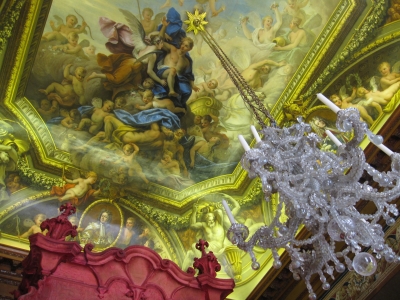
Mural on the ceiling of the Queen's Bedchamber - photo by Rob McFarland
Maybe this isn’t such a good idea. After spending all afternoon reading about Hampton Court Palace’s supernatural residents, I’ve decided in a wine-fuelled act of uncharacteristic bravery to venture inside the palace grounds at midnight.
The moon has bathed everything in a ghostly half-light as I creep across the uneven cobblestones of the palace’s main courtyard. I pass through a narrow brick archway and enter a dimly lit alley. It is eerily still and unnervingly quiet.
My imagination kicks into overdrive. I start to wonder how I’d react to hearing the “piercing and unearthly shrieks” of Catherine Howard, King Henry VIII’s fifth wife, who was dragged away by guards after being sentenced to death for adultery. Or to seeing the pallid form of his third wife, Jane Seymour, who has been spotted hanging around staircases dressed all in white and holding a lit taper.
If Reno and Las Vegas were siblings, Las Vegas would wear a white suit and drive a convertible. He’d be the cad who always arrives late but still gets fussed over. Reno would drive a dilapidated Datsun. He’d have scruffy hair, an untucked shirt and a coffee stain on his tie.
Reno has always suffered by comparison with its more glamorous neighbour. And while it certainly can’t compete in terms of scale or opulence, it does have an endearing, rough-around-the-edges, knockabout charm. It’s also attempting to spruce up its act through several rejuvenation projects. Not only has it tucked in its shirt and bought a new tie, but the once-dodgy downtown area has been transformed into a welcoming, family-friendly destination.
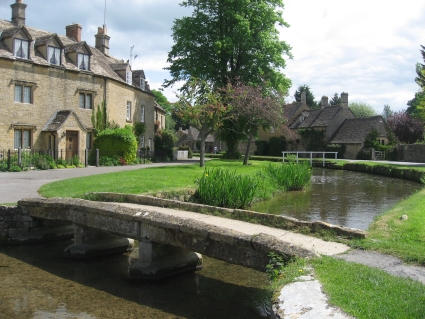
Lower Slaughter in the Cotswolds – photo by Rob McFarland
Winner, 2010 ASTW Best International Story (under 1000 words)
It is the driving equivalent of a Mexican standoff. Two of us are travelling in opposite directions on a narrow, single track road. One of us will have to back up. It’s a battle of wills. I’ve already lost two of these this morning. I need a win.
With narrowed eyes I attempt to stare down my adversary. He seems unfazed. Five seconds pass. It feels like a lifetime.
Finally, my female passenger says to me: “Aren’t you going to back up?”
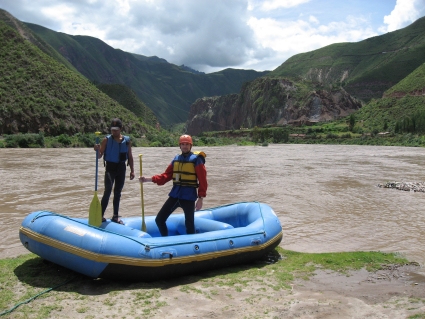
‘More power, more power,” Orlando screams from the back of the raft. “That’s easy for you to say, mate,” I think to myself as I plunge my oar back into the icy water. “You’re not paddling.”
We make it through the swirling rapids to some calmer water on the other side and I double up over my paddle and gulp in lungfuls of oxygen-deprived air.
White-water rafting at 3000 metres is hard work. To be honest, doing anything at 3000 metres is hard work. At this altitude a flight of stairs can reduce you to a gasping wreck, so a white-water rafting trip might not seem the ideal way to spend an afternoon. But it’s one of the best ways of taking in the majestic scenery around Cusco, a region in Peru that’s famous for its soaring tree-covered mountains and ancient Inca ruins.
Unfortunately, only one other person in Cusco felt the same way, so there are just the two of us on today’s tour. Which would be fine if we were in a kayak. But we’re in an eight-person raft. And our guide – a sinewy local by the name of Orlando – is a maniac.
People queueing outside Grimaldi's Pizzeria in Brooklyn
Tourists have been known to line up for hours to get a table at Grimaldi’s, a legendary Brooklyn eatery that has been voted the No.1 pizzeria in New York by the Zagat Survey for five consecutive years. The restaurant doesn’t take reservations and, when we arrive on a sunny Saturday morning an hour after opening, the line is already snaking down the block.
But today we’re not just any tourists. We’re on A Slice of Brooklyn Pizza Tour and we get to march to the front of the queue and straight to the only reserved table in the house. Tony Muia, the tour’s founder and guide, tells us what to do should anyone object: “Remember, you’re in New York now. Put your chin up and your chest out and if anyone says anything, tell ’em to fuhgettaboudit.”
Exterior of Mets' Citi Field Stadium - photo by Rob McFarland
When Charlie from Long Island explains it, it all sounds so simple. “At the end of the day, it’s all about the team who scores the most runs,” he says. “Ignore all the statistics that’s the only thing that matters. The problem with this new stadium is that it’s hard to hit home runs.”
Charlie gestures to the feet markers written on the boundaries of the field. “Look they gotta hit the ball 415 feet and still clear a 16-foot wall.”
The very next batter hits the ball straight into the crowd.
Charlie turns to me and shrugs as only a New Yorker can. “Hey, don’t listen to me whaddo I know.”
Traditional Japanese string instrument in hotel foyer - photo by Rob McFarland
I’m sitting at a bar wearing a dressing gown, listening to a lime green-clad Mexican band singing La Bamba. I’m surrounded by dozens of similarly dressed Japanese, most of whom are smiling and clapping along as if this is a perfectly normal way to spend a Friday night.
It sounds like the sort of bizarre dream brought on by too much cheese before bed. What’s stranger still is I’m nowhere near Mexico and despite La Bamba being one of my least favourite songs, I’m smiling and clapping along, too.